


题文
Poetry Writing Classes OnlineConsider it the caviar (鱼子酱) of literature: tiny eggs with wonderful taste. Poetry has inspired the human soul for thousands of years and there are those who still treasure its magnificence.If you hear mermaids singing or feel the wind or see the sun rising in ribbons then you are one of these happy few.Excellence in poetry is mysterious, but a quest(探索) worth pursuing.In our courses, you will learn to control sound, structure, line, word, theme etc.into well-crafted poems and you will improve your precision by experimenting with various time-honored forms.You will also learn how and where to market your work.
Level I
Poetry Writing 10-Week Workshop
Using a balance of lecture, exercise, and comment on work from the instructor and classmates, this course gives students a firm grounding in all the basics of poetry writing.
·Write two-six poems
·Lectures on basics of poetry craft
·Writing exercises
·Present work for critique (评论)(two times)
PoetryI is for beginners or anyone who wants to brush up on the fundamentals.
online Classes
Registration Fee: $25.
Tuition: $395, Returning Students $365.
Each class strictly limited to 16 students, aged 18 and up
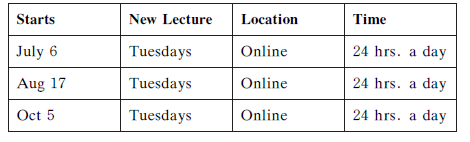
·You can still enroll in this class!
Advanced
Poetry Writing 10-Week Workshop
Focusing on developing projects and receiving comment from the instructor and classmates, this course helps students sharpen their skills and work toward completion of publishable work.Begin or refine two-six poems.
·Lectures that expand on basics of poetry craft
·Writing exercises
·Present work for in-depth critique (two times)
online Classes
Registration Fee; $ 25.
Tuition: $395.Returning Students $365.
Each class strictly limited to 14 students, aged 18 and up.

·You can still enroll in this class!
小题1:You learn the following on Poetry Writing Classes online EXCEPT _____A.where you can sell your poemsB.why it's worth seeking excellence in poetryC.how to write a well-crafted poemD.how to sharpen your skills in poetry小题2:If you rejoin the online poetry writing classes, you should pay _____.A.$390B.$410 C.$395D.$365小题3:If you are a beginner, you can start the courses from _____.A.July 14B.Aug 14 C.July 6D.Oct 6小题4:In Advanced Poetry Writing Class, you are asked to _____.A.lay steady foundations for the basis of poetry writingB.hand in your poems getting ready for publicationC.make comments on the work of your classmatesD.give some lectures on basics of poetry craft小题5:The passage is most probably from a _____.A.newspaper advertisementB.book reviewC.scientific magazineD.news report 题型:未知难度:其他题型
答案
小题1:B
小题2:A
小题3:C
小题4:C
小题5:A
解析
这是一个作文初级高级培训班的广告。小题1:B 细节判断题。根据第一段In our courses, you will learn to control sound, structure, line, word, theme etc.into well-crafted poems and you will improve your precision by experimenting with various time-honored forms.You will also learn how and where to market your work.可知A与C正确,根据
this course helps students sharpen their skills and work toward completion of publishable work.说明D正确。故只有B项是错误的。答案为B。
小题2: A计算题。根据Returning Students $365.以及注册费25$可知答案为D。
小题3:C细节题。对于初学者,应是Level 1, 所以应对照表格1,那么只有C项符合。
小题4:C 推断题。根据Focusing on developing projects and receiving comment from the instructor and classmates,可知,你可能会被要求评论你同学的作文。
小题5:A体裁判断题。本文是一篇广告,所以A正确。
考点
据考高分专家说,试题“Poetry Writing Class.....”主要考查你对 [广告布告类阅读 ]考点的理解。广告布告类阅读
广告类阅读:1、品味广告的标题,联系平时所积累的知识,为了解材料大意作铺垫。
2、要特别留意广告中包含的数字、联系人、地址等。
3、要注意文中以黑体、大写、下划线等方式加以提示的文字,因为这很有可能是材料的核心或
至少是一部分内容的概括。
广告布告类阅读特点及解题技巧:
一、广告布告类阅读试题的文体特点:
此类文章不同于其他文体的文章,其目的是为了向读者传输信息,措辞简洁明了,直截了当,一般说来,广告布告类阅读试题具有以下特点:
1、选材特点:
信息量大,文句精炼,形式灵活,用最少的篇幅表达最大量的信息。
2、内容特点:
生活化,实用化,多样化,如产品宣传、服务介绍、通知、海报、启示、招生招聘等。
3、形式特点:
标题醒目,重点突出,条理清晰,常用粗体字或各类项目符号使文章结构更鲜明。
4、语言特点:
人名、地名、专有名词多;生词多;缩略词、祈使句、省略句多;结构不完整。
5、命题特点:
主要考察考生提取信息和处理信息的能力,既注重特定细节的筛选、类比、综合,又注重推理判断题的考查,题目设置相对较容易。
二、解题技巧点拨:
阅读这类文章时,也应该在整体把握文章结构的前提下,主要注意细节信息。细节题题干都是相应原文的变形(如同义改写、词性转换等),因此要找到答案一定要找到题干在原文中的出处,再把原文和选项相比较。做题时,根据所提问题用寻读、跳读的方法可达到事半功倍的效果。同时,在阅读时也要特别注意文中以粗体、大写、下划线等方式加以提示的文字,因为这很有可能是文章的核心或某一部分内容的概括。具体答题策略如下:
1、先题后文:
先读试题,了解考点;明确目的,快速捕捉,获取信息。
2、题干定向:
根据题干关键词到文中定位答案范围,按照题目顺序依次而下:问题与材料相同:对号入座;问题与原文相同:同义替换、归纳事实等。
3、生词模糊:
遇到生词;如无关答题,直接跳过;涉及答题,则根据语境、构词法等猜词。
4、信息补全:
对于影响理解的省略句,可根据语境,将其补全。



