


题文
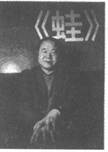
Neatly putting an emphasis on his storytelling skill is how writer Mo Yan began his Nobel Lecture in Literature speech, “Storyteller”, on Friday (Saturday, Beijing time) in Stockholm.
For 40 minutes he talked about his mother’s 36 on him as a person and a writer, his literary inspirations, and how he 37 with the controversy(争论)that followed the announcement of his Nobel victory.
He told his audience that as a boy he told stories to cheer up his mother, and 38 that poverty and loneliness fueled his imagination as a writer after he grew up. 39 , authors such as William Faulkner and Gabriel Garcia Marquez 40 him, he said, especially their bold and unlimited writing style.
“A person should be 41 in daily life, but follow one’s instinct(本能)and take control when it 42 to literary creation.”
He said the soul of 43 all of his works is the boy in Transparent Carrot who has an almost superhuman ability to bear 44 . He added that he also tried to make his hometown of Gaomi in Shandong Province a microcosm(缩影)of China and even the 45 .
His greatest challenge, he said, was writing novels that deal with 46 realities.
“In writing about the dark aspects of society there is a(n) 47 that emotions and anger allow politics to limit literature.”
He said literature must be 48 on real life but go beyond it.
He also mentioned the 49 surrounding his selection as Nobel winner, saying he was showered with many flowers. 50 he was a target for “stone throwers”.
“At first I thought I was the 51 of the controversies, but over time I’ve come to realize that the real target was a person who had 52 to do with me.”
Mo 53 his lecture by saying he was made to feel like an actor in a play with all the attention he was 54 , but he had decided that the best way to communicate his thoughts was to __55 writing.
小题1:A.affectionB.influenceC.occasionD.position小题2:A.agreedB.foughtC.dealtD.did小题3:A.addedB.warnedC.remindedD.imagined小题4:A.HoweverB.OtherwiseC.ThereforeD.Besides小题5:A.preservedB.inspiredC.entertainedD.taught小题6:A.confidentB.certainC.comfortableD.modest小题7:A.goesB.comesC.turnsD.gets小题8:A.nearlyB.hardlyC.scarcelyD.always小题9:A.dangerB.sufferingC.relievingD.happiness小题10:A.cityB.villageC.worldD.province小题11:A.socialB.economicalC.agriculturalD.cultural小题12:A.encouragementB.dangerC.advantageD.event小题13:A.insistedB.spentC.basedD.passed小题14:A.contradictionB.contestC.contraryD.controversy小题15:A.MeanwhileB.OtherwiseC.HoweverD.Instead小题16:A.goalB.intentionC.targetD.purpose小题17:A.somebodyB.anythingC.nothingD.anybody小题18:A.adoptedB.concludedC.admittedD.concerned小题19:A.throwingB.acceptingC.offeringD.receiving小题20:A.carry onB.take onC.bring outD.put out 题型:未知 难度:其他题型
答案
小题1:B
小题2:C
小题3:A
小题4:D
小题5:B
小题6:D
小题7:B
小题8:A
小题9:B
小题10:C
小题11:A
小题12:B
小题13:C
小题14:D
小题15:A
小题16:C
小题17:C
小题18:B
小题19:D
小题20:A
解析
本文是莫言获得诺贝尔文学奖以后做的演讲,其中提到他的写作风格,收到的关注和争议。
小题1:考查名词;A. affection喜爱B. influence影响C. occasion场合D. position位置,莫言谈到他妈妈对他的影响。选B
小题2:考查动词短语:deal with和how连用,do with和what连用, agreedwith同意, fought with和…做斗争,选C
小题3:考查动词A. added增加B. warned警告C. reminded提醒D. imagined想象,他补充说贫困和孤单燃起他的想象力。选A
小题4:考查副词:A. However然而B. Otherwise否则C. Therefore因此D. Besides此外,句意:此外,William Faulkner和Gabriel Garcia Marquez这样的作家激励了他,选D
小题5:考查动词A. preserved保留B. inspired激励C. entertained娱乐D. taught教,解析同上,选B
小题6:考查形容词:A. confident自信B. certain当然C. comfortable舒服的D. modest谦虚的,一个人在日常生活中应该是谦虚的,选D
小题7:考查句型:when it comes to当说到…的时候,选B
小题8:考查副词:A. nearly几乎B. hardly几乎不C. scarcely很少D. always总是,他说几乎所有的作品的灵魂都是Transparent Carrot里面的男孩。选A
小题9:考查名词:A. danger危险B. suffering受苦C. relieving缓解D. happiness快乐,他有忍受痛苦的超人的能力。选B
小题10:考查名词:A. city城市B. village乡村C. world世界D. province省,他努力的使自己的家乡成为中国甚至世界的缩影。选C
小题11:考查形容词:A. social社会的B. economical经济的C. agricultural农业的,D. cultural文化的,他的最大的挑战是处理社会的问题。选A
小题12:考查名词:A. encouragement鼓励B. danger危险C. advantage优势,D. event事件,在写社会的黑暗面的时候,有一种危险,情感和愤怒让政治影响到文学。选B
小题13:考查动词A. insisted坚持B. spent度过C. based基于D. passed通过,他说文学要以现实为基础,又要超越现实。选C
小题14:考查名词:A. contradiction矛盾B. contest比赛C. contrary相反的D. controversy争议,他也提到关于他当选诺贝尔奖的争议。选D
小题15:考查副词:A. Meanwhile同时B. Otherwise然而C. However然而D. Instead代替,同时他也是被攻击的目标。选A
小题16:考查名词:A. goal目标B. intention打算C. target目标D. purpose目的,一开始我觉得自己是争议的目标。选C
小题17:考查不定代词:A. somebody有些人B. anything任何事C. nothing没有什么D. anybody任何人,have nothing to do with和…无关,选C
小题18:考查动词A. adopted采纳B. concluded总结C. admitted承认,D. concerned关心,莫言结束演讲。选B
小题19:考查动词A. throwing仍B. accepting(主观)接受C. offering提供D. receiving(客观)接受,因为他收到的所有的注意,选D
小题20:考查词组:A. carry on继续B. take on呈现C. bring out显现D. put out公布,交流他想法的最好的办法就是写作。选A
点评:本文是莫言获得诺贝尔文学奖以后做的演讲,其中提到他的写作风格,收到的关注和争议。文章层次分明结构严谨,立足语篇,侧重通过上下文信息考查考生的综合运用英语的能力,注重语篇的理解,学生平时要培养自己驾驭语篇的能力,培养自己根据语篇综合运用英语的能力。
考点
据考高分专家说,试题“Neatly putting an em.....”主要考查你对 [政治经济类阅读 ]考点的理解。政治经济类阅读
政治经济类文章的概念:
要做好这类阅读,平时就要注意了解国内外发生的政治经济大事,掌握一定背景知识,对这类文章的叙述特点及内容安排有一定了解,还要扩展这方面的词汇。阅读这类文章,要抓住文章的核心,即文章整体和各段主要在说什么,也要注意段落之间的逻辑关系。
如何备考政治经济类阅读理解题:
【题型说明】政治经济类阅读文章是高考常选材料之一。该类文章时代气息浓郁,语言鲜活,但熟字新义词、超纲词及专业词语多,长句、难句多。政治类文章大多数是同学们感性趣的内容,读起来倒有似曾相识的感觉,经济类文章读起来就像是雾里看花,文章看完,一头雾水。再加之这类文章的命题侧重于词义猜测、推理判断和文章主旨,同学们对这类题材是望而生畏。
【备考策略】建立心理优势。针对不同体裁的文章,我们要采取相应的阅读方法和技巧。政治类文章多采用记叙文形式,我们可采取“顺读法”,以便抓关键语句,领会文章主旨;而经济类文章则多采用说明文形式,我们则可以采取“逆读法”,先读试题,再从文章中查找有用信息。若遇到的确难读的材料。千万不用着急,因为你觉得难,其他人也一定是同感。在高考前,我们就要有这种心理准备,高考试卷肯定有一、两篇难以阅读的材料。不过,我们平时可以有意识地从报刊杂志上找一些较难的阅读材料来阅读,以培养自己迎难而上的心理素质。
【答题方法】
1、寻找主干:
根据英语中五种基本句型结构,把句子中的主语、谓语、宾语、表语等主要成分找出来,其他成分如定语、状语、补语等则易于理解。找到了句子主干,句子的意思至少明白了一半。
2、剔除从句:
在一个长句中可能会出现若干个从句,在理解时,如果把各个从句剔除出来单独理解,然后把大意拼凑起来,整个长句的意思就会明白六、七分。
3、辨别分句:
一个长句如果是由几个并列、转折、递进、对比关系的分句组成,句中往往有表示这些分句关系的连接词,只要能弄清楚分句和分句之间的逻辑关系,再把各层分句的意思加以连贯,整个长句的句意基本上能跃然脑中。
4、寻找关键词:
如果一个句子看完,一点句意的感觉也没有,下下策就是抓住句中的关键词,通过关键词大体弄懂这个长句的意思。



