


题文
Maybe you are an average student. ___小题1:__ This is not necessarily so, however. Anyone can become a better student if he or she wants to. Here’s how.Plan your time carefully. When planning your work, you should make a list of things that you have to do. After making this list, you should make a schedule of your time. First your time for eating, sleeping, dressing, etc. Then decide a good, regular time for studying. ___小题2:__ A weekly schedule may not solve all your problems, but it will force you to realize what is happening to your time.
Make good use of your time in class. ___小题3:___ Listening carefully in class means less work later. Taking notes will help you remember what the teacher says.
Study regularly. When you get home from school, go over your notes; look at the important points that your teacher is going to discuss the next day, read that material. __小题4:____ If you do these things regularly, the material will become more meaningful, and you’ll remember it longer.
Develop a good attitude towards tests. The purpose of a test is to show what you have learned about a subject. They help you remember your new knowledge. The world won’t end if you don’t pass a test, so don’t be over worried.
__小题5:___ You will probably discover them after you have tried these.A.There are other methods that might help you with your studying.B.Don’t forget to set aside enough time for relaxation.C.Take advantage of class time to listen to everything the teacher says.D.No one can become a top student unless he or she works hard.E. You probably think you will never be a top student.
F. Make full use of class time to take notes of what the teacher says in class.
G. This will help you understand the next class. 题型:未知难度:其他题型
答案
小题1:E
小题2:B
小题3:C
小题4:G
小题5:A
点击查看序数词知识点讲解,巩固学习
解析
试题分析: 也许你是一个中等水平的学生。然而只要愿意,每个人都可以变得更优秀。本文就怎样变成更优秀的学生给出几点建议。
小题1:E。根据语境Maybe you are an average student.This is not necessarily so, however. Anyone can become a better student if he or she wants to.可知,你也许是一个中等生,但是只要愿意去做,任何人都能变优秀。比较选项可知E. You probably think you will never be a top student.(也许你认为你永远都成不了尖子生)符合段落大意。故选E。
小题2:B。分析语境可知第二段主要讲仔细规划时间,根据前文First your time for eating, sleeping, dressing, etc. Then decide a good, regular time for studying. 首先要确定吃饭,睡觉和穿衣等事情的时间。然后为学习制定一个好的有规律的时间。比较选项可知B. Don’t forget to set aside enough time for relaxation.(不要忘记留出放松休息的时间)符合段落大意。故选B。
小题3:C。分析语境可知第三段主要讲上课时认真听老师讲的内容。根据前后文Make good use of your time in class. Listening carefully in class means less work later. 比较选项可知C. Take advantage of class time to listen to everything the teacher says.(充分利用上课时间认真听讲教师讲的内容)符合段落大意。故选C。
小题4:G。分析语境可知第四段主要讲有规律地复习。根据前文When you get home from school, go over your notes; look at the important points that your teacher is going to discuss the next day, read that material.比较选项可知G. This will help you understand the next class.(这将会帮助你理解下节课的内容)符合段落大意。故选G。
小题5:A。通读全文可知,文章主要就怎样变成更优秀的学生给出几点建议。根据后文You will probably discover them after you have tried these.比较选项可知A. There are other methods that might help you with your studying.(还有很多其它帮助学习的方法,当你尝试这些方法之后你可能会发现它们)符合段落大意。故选A。
考点
据考高分专家说,试题“Maybe you are an ave.....”主要考查你对 [序数词 ]考点的理解。序数词
序数词的概念:
表示顺序的数称为序数词。如:first, second, third, fourth。
序数词的构成与用法:
1、序数词的构成:
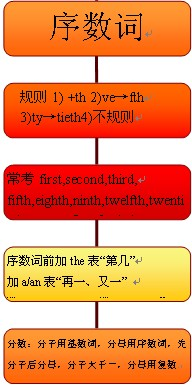
①一般来说,是由相应的基数词加词尾th构成。
例:four+th→fourth
six+th→sixth
seven+th→seventh
ten+th→tenth
②下面这些基数词在变为序数词时,有特殊的变化。
例:one→first
two→second
three→third
five→fifth
eight→eighth
nine→ninth
twelve→twelfth
③十位整数序数词的构成方法是将基数词的词y变成i,然后再加eth。
例:twenty→twentieth
thirty→thirtieth
forty→fortieth
ninety→ninetieth
④两位或两位以上的基数词变成序数词时,仅将个位数变成序数词。
例:twenty-one→twenty-first
thirty-five→thirty-fifth
a hundred and fifty-three→a hundred and fifty-third
2、序数词的用法:
①序数词在使用时,一般加上定冠词。
例:the first book
the second floor
the third day
the fourth week.
②序数词在多数情况下都用作定语,有的也可以作表语、主语和宾语。
例:The may1st is Labour Day. 五月一日是劳动节。
My room is on the second floor. 我的房间在二楼。
The first is larger than the secon.(主语)第一个比第二个大。
Read the book from the first.(宾语)从开头读这本书。
You'll be the sixth to write.(表语)你将是第六个写的。
③序数词的前面可以加上不定冠词,用来表示“再一”,“又一”的意思。
例:You may have a third try. 你可以第三次尝试。
序数词知识体系:
约数的表达方法:
用tens/dozens/scores/hundreds/thousands/millions of 表示“几十、几百、上千、成千上万”等。
如:The boy bought dozens of pencils.
Thousands of people died in the earthquake.
注意: (A):dozen, score, hundred, thousand, million等表示确切数量时,不用复数。
如:five dozen (of) eggs 五打鸡蛋
hree hundred people 三百个人
分数词的构成和用法:
1)分数词构成法:
分数词(FractionalNumerals)由基数词和序数词构成,基数词代表分子,序数词代表分母。除了分子为1的情况下,序数词都要用复数形式:
如:1/4:one-fourth
5/9:five-ninths
2/3:two-thirds
17/5:three and two-fifths
7/12:seven-twelfths
379/8:forty-seven and three-eighths
此外还有下面表示法:
如:1/2:a(one) half
1/4:a(one) quarter
3/4:three-quarters
9/4:two and a quarter
3/2:one and half
31/4:seven and three quarters



