


题文
C
Driving in a foreign country is always different in at least some ways from driving in your own country. Here are some general points regarding driving in New Zealand.


● Visitors wishing to drive in New Zealand do not require an international driver's licenses but are required to carry their local driver's license whenever driving.
● Vehicles drive on the left-hand side of the road as they do in Britain, Australia, and Japan. Most rental vehicles will have a sticker reminding you of this important fact.
● When the traffic light is red, you must stop. There is no left turn rule as in North America.
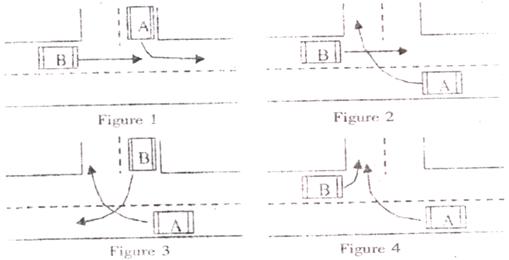
● New Zealand road rules follow international standards but please note that in New Zealand vehicles turning left must give way to traffic turning right.
● In general, if you are turning left (where there are give-way signs or no signs), give way to vehicles that not turning. In all other situations, give way to vehicles crossing or coming from your right.
● Scat belts must be worn at all times while driving in New Zealand. This stands for the driver and passengers. The driver is responsible for ensuring all passengers are wearing their seatbelts.
● Do not drink alcohol before driving in New Zealand-drinking and driving laws are strictly enforced.
● Speed limits are in kilometers per hour (kph), not miles per hour (mph).
Speed conversion: 1 kph equals 0.621mph; 1 mph equals 1.61 kph.
● The speed limit on the open road is 100km/h. In towns and cities the speed limit is 50km/h. Be sure to obey all school crossing speed reductions as speed cameras operate regularly throughout New Zealand.
For further information and up to date road conditions visit: http://www. transit. govt. nz
49.What can be learned from the passage?

A.A passenger's not wearing the seat belt has little to do with the driver.
B.There will be a reminder for driver to remember to drive on the left side.
C.Cars passing a school in towns should drive at a speed of less than 31 mph.
D.A foreign driver is expected to have a driving license issued by New Zealand.
50.Which of the following statements correctly explains road rules in New Zealand?
A.In Figure 1, Car B must give way to Car A.

B.In Figure 2, Car B must give way to Car A.
C.In Figure 3, Car B must give way to Car A.
D.In Figure 4, Car B must give way to Car A.
51.This passage is most likely______.
A.a travel brochure for locals
B.a website travel introduction
C.an advertisement of travel
D.a travel column in a geographical magazine 题型:未知 难度:其他题型
答案
49---51 CDB
解析
略考点
据考高分专家说,试题“C Driving in a forei.....”主要考查你对 [政治经济类阅读 ]考点的理解。政治经济类阅读
政治经济类文章的概念:
要做好这类阅读,平时就要注意了解国内外发生的政治经济大事,掌握一定背景知识,对这类文章的叙述特点及内容安排有一定了解,还要扩展这方面的词汇。阅读这类文章,要抓住文章的核心,即文章整体和各段主要在说什么,也要注意段落之间的逻辑关系。
如何备考政治经济类阅读理解题:
【题型说明】政治经济类阅读文章是高考常选材料之一。该类文章时代气息浓郁,语言鲜活,但熟字新义词、超纲词及专业词语多,长句、难句多。政治类文章大多数是同学们感性趣的内容,读起来倒有似曾相识的感觉,经济类文章读起来就像是雾里看花,文章看完,一头雾水。再加之这类文章的命题侧重于词义猜测、推理判断和文章主旨,同学们对这类题材是望而生畏。
【备考策略】建立心理优势。针对不同体裁的文章,我们要采取相应的阅读方法和技巧。政治类文章多采用记叙文形式,我们可采取“顺读法”,以便抓关键语句,领会文章主旨;而经济类文章则多采用说明文形式,我们则可以采取“逆读法”,先读试题,再从文章中查找有用信息。若遇到的确难读的材料。千万不用着急,因为你觉得难,其他人也一定是同感。在高考前,我们就要有这种心理准备,高考试卷肯定有一、两篇难以阅读的材料。不过,我们平时可以有意识地从报刊杂志上找一些较难的阅读材料来阅读,以培养自己迎难而上的心理素质。
【答题方法】
1、寻找主干:
根据英语中五种基本句型结构,把句子中的主语、谓语、宾语、表语等主要成分找出来,其他成分如定语、状语、补语等则易于理解。找到了句子主干,句子的意思至少明白了一半。
2、剔除从句:
在一个长句中可能会出现若干个从句,在理解时,如果把各个从句剔除出来单独理解,然后把大意拼凑起来,整个长句的意思就会明白六、七分。
3、辨别分句:
一个长句如果是由几个并列、转折、递进、对比关系的分句组成,句中往往有表示这些分句关系的连接词,只要能弄清楚分句和分句之间的逻辑关系,再把各层分句的意思加以连贯,整个长句的句意基本上能跃然脑中。
4、寻找关键词:
如果一个句子看完,一点句意的感觉也没有,下下策就是抓住句中的关键词,通过关键词大体弄懂这个长句的意思。



