


题文
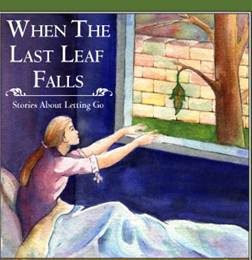
At the top of a three-storey brick house Sue and Johnsy had their studio. In November a cold, unseen stranger, whom the doctors called Pneumonia(肺炎), touched one here and there with its icy fingers. Johnsy was struck down, and she lay, hardly moving, on her bed looking through the window at the blank side of the next brick house.
One morning the busy doctor invited Sue into the hallway(走廊).
“She has one chance in ten,” he said, “And that chance is for her to want to live. She has made up her mind that she’s not going to get well. I will do all that I can. But whenever my patient begins to count the carriages in her funeral procession(队列), I subtract 50 percent from her chance to live.”
After the doctor had gone, Sue went into the workroom and cried. Then she came into Johnsy’s room with her drawing board, whistling.
Johnsy lay hardly moving with her face toward the window. Sue stopped whistling, thinking she was asleep.
She arranged her board and began a drawing. As Sue was sketching, she heard a low sound. She went quickly to the bedside.
Johnsy’s eyes were open wide. She was looking out the window and counting backward.
“Twelve,” she said, and a little later “eleven”; and then “ten”, and “nine”; and then “eight” and “seven”, almost together.
Sue looked out the window. What was there to count? There was only the blank side of the brick house twenty feet away. An old ivy vine(常春藤) climbed halfway up the brick wall. Its branches clung(紧紧缠着), almost bare, to the bricks.
“What is it, dear?” asked Sue.
“Six,” said Johnsy, in almost a whisper. “They’re falling faster now. Three days ago there were almost a hundred. There goes another one. There are only five left now”.
“Five what, dear? Tell me.”
“Leaves. On the ivy vine. When the last one falls, I must go, too. Didn’t the doctor tell you?”
“Oh, I never heard of such nonsense,” said Sue. “What have old ivy vine leaves to do with your getting well? Why, the doctor told me this morning that your chances for getting well real soon were ten to one! Try to take some soup now.”
“There goes another. No, I don’t want any soup. I want to see the last one fall before it gets dark. Then I’ll go , too.”
“Johnsy, dear,” said Sue, bending over her, “will you promise me to keep your eyes closed, and not look out the window until I’m done working? I need the light or I would draw the shade down.”
“Tell me as soon as you have finished,” said Johnsy, closing her eyes, “because I want to see the last one fall. I’m tired of waiting. I want to turn loose my hold on everything and go sailing down, down, just like one of those poor, tired leaves.”
小题1:By saying “Pneumonia touched one here and there” (in the first paragraph), the author means that _________.A.some people were affected by the illnesses of othersB.pneumonia caused damage to the ivy vineC.two people became illD.many people came down with the illness小题2: How did Johnsy feel about the situation during the passage?A.confidentB.hopelessC.tiredD.curious小题3:We can learn from the passage that _____________.A.Sue came into the room whistling perhaps because she thought Johnsy might like the music.B.Johnsy’s life was compared to the carriages in a funeral processionC.Sue told a lie to Johnsy about the doctor’s wordsD.Johnsy wanted to know about the falling ivy leaves to meet her own curiosity小题4:The underlined word “subtract” in the third paragraph probably means “________”.A.reduceB.hopeC.addD.doubt小题5:The passage is probably taken out of ______________.A.a newspaperB.a novelC.a medical reportD.a girl’s diary 题型:未知 难度:其他题型
答案
小题1:D
小题2:B
小题3:C
小题4:A
小题5:B
解析
文章大意:这篇文章是节选自欧亨利的《最后一片叶子》,这部分的大意是:年轻贫穷的画家Johnsy不幸染上肺炎,女友Sue竭尽全力照料她,但她的病情仍不见好转。万念俱灰的Johnsy放弃了生存的欲望,准备在窗外对面墙上常春藤的最后一片叶子凋落坠地时,撒手人寰。
小题1:句意理解题:从第一段的句子:In November a cold, unseen stranger, whom the doctors called Pneumonia(肺炎), touched one here and there with its icy fingers. Johnsy was struck down, 可知这句话是表示很多人得了肺病,选D
小题2:推理题:从第三段的句子:“She has one chance in ten,” he said, “And that chance is for her to want to live. She has made up her mind that she’s not going to get well. 可知Johnsy 觉得自己好不了了,说明她是不抱希望的,选B
小题3:推理题:从第三段的内容和第14段的句子:Why, the doctor told me this morning that your chances for getting well real soon were ten to one! Try to take some soup now.”可知Sue对Johnsy撒了谎,选C
小题4:猜词题:从第三段的句子:But whenever my patient begins to count the carriages in her funeral procession(队列), I subtract 50 percent from her chance to live.”可知如果病人想到自己葬礼的马车的时候,生存机会就减少了,选A
小题5:文章出处题:这篇文章是节选自欧亨利的《最后一片叶子》,所以选B
考点
据考高分专家说,试题“At the top of a thre.....”主要考查你对 [政治经济类阅读 ]考点的理解。政治经济类阅读
政治经济类文章的概念:
要做好这类阅读,平时就要注意了解国内外发生的政治经济大事,掌握一定背景知识,对这类文章的叙述特点及内容安排有一定了解,还要扩展这方面的词汇。阅读这类文章,要抓住文章的核心,即文章整体和各段主要在说什么,也要注意段落之间的逻辑关系。
如何备考政治经济类阅读理解题:
【题型说明】政治经济类阅读文章是高考常选材料之一。该类文章时代气息浓郁,语言鲜活,但熟字新义词、超纲词及专业词语多,长句、难句多。政治类文章大多数是同学们感性趣的内容,读起来倒有似曾相识的感觉,经济类文章读起来就像是雾里看花,文章看完,一头雾水。再加之这类文章的命题侧重于词义猜测、推理判断和文章主旨,同学们对这类题材是望而生畏。
【备考策略】建立心理优势。针对不同体裁的文章,我们要采取相应的阅读方法和技巧。政治类文章多采用记叙文形式,我们可采取“顺读法”,以便抓关键语句,领会文章主旨;而经济类文章则多采用说明文形式,我们则可以采取“逆读法”,先读试题,再从文章中查找有用信息。若遇到的确难读的材料。千万不用着急,因为你觉得难,其他人也一定是同感。在高考前,我们就要有这种心理准备,高考试卷肯定有一、两篇难以阅读的材料。不过,我们平时可以有意识地从报刊杂志上找一些较难的阅读材料来阅读,以培养自己迎难而上的心理素质。
【答题方法】
1、寻找主干:
根据英语中五种基本句型结构,把句子中的主语、谓语、宾语、表语等主要成分找出来,其他成分如定语、状语、补语等则易于理解。找到了句子主干,句子的意思至少明白了一半。
2、剔除从句:
在一个长句中可能会出现若干个从句,在理解时,如果把各个从句剔除出来单独理解,然后把大意拼凑起来,整个长句的意思就会明白六、七分。
3、辨别分句:
一个长句如果是由几个并列、转折、递进、对比关系的分句组成,句中往往有表示这些分句关系的连接词,只要能弄清楚分句和分句之间的逻辑关系,再把各层分句的意思加以连贯,整个长句的句意基本上能跃然脑中。
4、寻找关键词:
如果一个句子看完,一点句意的感觉也没有,下下策就是抓住句中的关键词,通过关键词大体弄懂这个长句的意思。



