


题文
Great Britain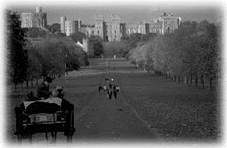
“Great Britain” has several different names. Some people say “Britain”, or “the United Kingdom”, or just “UK”. There are four different countries in the United Kingdom: England, Scotland, Wales and Northern Ireland.
Everyone from Britain is British, but only people from England are English. People from Scotland are Scottish, people from Wales are Welsh, and people from Northern Ireland are Irish. Don't call a Scottish or Welsh person English. He won’t like it!
Altogether more than 56 million people live in Britain, many of them in big industrial cities like London, Liverpool and Manchester, but people are often surprised by how much of Britain is open country, with lovely hills and woods, quiet rivers, lakes and farmlands.
Everyone in Britain speaks English. But in some parts of Scotland and Wales people speak an older language as well. The Welsh are especially proud of their language, and you can see road signs in Welsh all over Wales.
Everyone speaks English, but they do not all speak it in the same way. A Scottish person has to listen carefully if he wants to understand a Londoner. And when a Welsh person speaks, everyone knows at once where he comes from!
Many people think that the weather is cold and wet in Britain all the year round. But it isn't! True, it sometimes rains and even snows for days and days, but every year there are weeks of beautiful sunny weather when the British put on their bikinis and go out to sunbathe.
Britain is only a small country, but every part is different. Scotland is a land of mountains, lakes and romantic castles. The winters are cold, with plenty of snow, but the summers are often warm and sunny. Most farmers keep sheep, and there are many small factories which make fine sweaters from their wool. In some parts of Scotland, there are very few people. Deer live in the hills, and the rivers are full of fish. But Glasgow and Edinburgh are both large and busy, with all that is good (and bad) in modern cities.
Northern Ireland has its problems, but it has beauty too. In the warm, wet climate, the grass grows a brilliant green, and much of the land is farming country. Belfast is a large industrial city with many fine buildings and a big port from which ships come and go to Scotland and England. But Belfast has had many difficult years, and it is not the busy place it once was.
In the north of England there are many old industrial towns. Now, a great number of factories have closed and thousands of people have no work. Some have moved to the new towns, built in the 1960s and 1970s, where the industries are more modern. Outside the towns, much of this part of England is beautiful countryside, with green hills, lakes and sandy beaches. Fishing is an important industry in the North East, and every night (except Sunday) the fishing boats go out to sea.
The centre of England (the “Midlands”) is also an important industrial area, especially near the huge cities of Coventry and Birmingham, the centre of the car industry. But everywhere, even in the heart of a modern city, there are buildings from an older Britain — cathedrals, castles, and houses built hundreds of years ago.
Wales is a special place, a country of high mountains and pretty valleys. But Wales has plenty of industry too, with many factories and coal mines. The people of Wales are very musical. Every year they have a festival of Welsh music and poetry called an “Eisteddfod”.
The west of England is rich farming country. It produces milk, cream, butter, cheese and apples, which go to make cider, a popular drink. In the villages, country people often grow their own fruit, vegetables and flowers.
Some areas of Britain are very crowded. Around Manchester, in northwest England, and Glasgow, in Scotland, are large city areas of houses and factories. The southeast of England, too, has many towns and cities, including London, the giant capital. But quite near London there are still some quiet villages and peaceful farms.
Britain is an island, of course, and you are never far from the sea. Some of the coast, especially in the west, is wild and rocky, with small, sandy beaches, and romantic old harbours. Other parts are industrial. The east coast of Scotland, for example, is busy with oilrigs and fishing boats. The most popular beaches are near the many holiday towns on the south coast, where the weather is usually warmer. It is here that Londoners come to relax.
London London has been a capital city for nearly a thousand years, and many of its ancient buildings still stand. The most famous of these are the Tower of London, Westminster Abbey and St. Paul's Cathedral, but most visitors also want to see the Houses of Parliament, Buckingham Palace (the Queen's London home) and the many magnificent museums.
Once, London was a small Roman town on the north bank of the Thames, but slowly it grew into one of the world's major cities with more than nine million people. Fewer people live in the centre now, but the suburbs are still growing.
Places now in the heart of London, like Westminster, once stood in the middle of green fields. Many small villages, like Hampstead, Chelsea and Mayfair, became part of London, but they still keep some of their old atmosphere. Different areas of London seem like different cities. The West End is a rich man's world of shops, offices and theatres. The East End is the old working people's district, where there are many small flats and houses, some old, some new.
London is always changing. New buildings go up and old ones come down. Poorer areas become fashionable and people with more money move into them.
A hundred years ago, the river was crowded with ships, leaving for Java and Japan, New Zealand and New York, but now the port is nearly empty. People travel by air, and London's main airport, Heathrow, is one of the busiest in the world.
Like all big cities, London has streets and concrete buildings, but it also has many big parks, full of trees, flowers and grass. Sit on the grass (you're allowed to!) in the middle of Hyde Park or Kensington Gardens, and you will think that you are in the country miles away.
Many people live outside the centre of London in the suburbs, and they travel to work by train, bus or underground. Every day, nearly half a million office workers travel into the “City”, the business centre of London, a small area full of banks and offices. Some people come from far out of London, even from the coast, and spend up to four hours travelling every day.
Working hours are from 9 a.m. to 5 p.m. From 8 until 10 every morning, and 4.30 to 6.30 every evening, the trains are crowded with people, and after the morning “rush hour” the shoppers come.
By day the whole of London is busy. At night, the City is quiet and empty, but the West End stays alive, because this is where Londoners come to enjoy themselves. There are two opera houses here, several concert halls and many theatres, as well as cinemas, and the pubs, restaurants and night clubs are busy half the night.
Many people think that London is all grey, but in fact red is London's favorite colour. The buses are red, the letter boxes are red, and the mail vans are all bright, bright red. London is at its best when people are celebrating. Then the flags, the soldiers' uniforms, the cheering crowds and the carriages and horses all sparkle in the sunshine —if it's not raining, of course!
Edinburgh Edinburgh is Scotland's capital, and one of the most beautiful cities in Britain. The heart of Edinburgh is the thousand-year-old castle, where the kings of Scotland lived for centuries.
From Edinburgh castle you can see for miles, north over the beautiful old streets, an arm of the sea that pushes inland. Far away are the mountains of central Scotland, often covered with snow.
Edinburgh has a busy cultural life. Every year, in September the International Festival takes place. Musicians, actors and singers come from all over the world and thousands of visitors fill the city. In the evening, the opera house, the theatres and the concert halls are full. In cafes and pubs, small groups sing, act and read poetry.
The castle is at its best in festival time. Every night there is a magnificent military “Tattoo”. Highland soldiers wearing “kilts” play the bagpipes, and march to the music.
Tartans, the patterns of the kilts, have an interesting history. Since the fifteenth century, each Scottish family has worn its own tartan as a kind of badge. It was a useful way of recognizing people, especially in times of war. Many tartans date only from the nineteenth century, but some of the old patterns still exist. “Dress” tartans, worn on special occasions, have light, bright colours. ”Hunting” tartans are usually green, blue or brown.
Oxford What is so special about Oxford and Cambridge, the two oldest universities in England? Why do so many students want to study there?
Both of these university towns are very beautiful. They have some of the finest architecture in Britain. Some of their colleges and libraries are three, four and even five hundred years old, and are full of valuable books and precious paintings. Both towns have many lovely gardens, where the students can read and relax in the summer months.
Oxford is the older university of the two. The first of its colleges was founded in 1249. The university now has thirty-four colleges and about twelve thousand students, many of them from other countries. There were no women students at Oxford until 1878, when the first women's college, Lady Margaret Hall, opened. Now, women study at most colleges.
Oxford is, of course, famous for its first class education as well as its beautiful buildings. Some of the most intelligent men and women in the country live and work here. Oxford gives them what they need: a quiet atmosphere, friendly colleagues, and the four-hundred-year-old Bodleian library, which has about five million books.
It is not easy to get a place at Oxford University to study for a degree. But outside the university there are many smaller private colleges which offer less difficult courses and where it is easy to enroll. Most students in these private schools take business, secretarial or English language courses.
小题1:Providing that you want to visit a most beautiful city and see “kilts” worn by men, you are supposed to go to ________.A.EdinburghB.LondonC.ManchesterD.Birmingham小题2:Oxford is one of the oldest universities in Britain, which is special because ________.A.it has a big and modern libraryB.it has a quiet and friendly atmosphereC.tremendous of the most intelligent people in the country live and work thereD.all of the above 题型:未知 难度:其他题型
答案
小题1:A
小题2:B
解析
文章介绍了英国的相关信息,英国的组成,名称,语言和风土人情,文章还具体介绍了几个大城市的特点。
小题1:细节题:从 Edinburgh 这部分里面的句子:Edinburgh is Scotland's capital, and one of the most beautiful cities in Britain.和 Highland soldiers wearing “kilts” play the bagpipes, and march to the music.两句话,可知要想享受英国最美的风景和看男的穿裙子,可以去Edinburgh.选 A
小题2:细节题:从文章倒数第二段的句子:Oxford gives them what they need: a quiet atmosphere, friendly colleagues, and the four-hundred-year-old Bodleian library, which has about five million books.可知牛津大学因为有安静地友好的氛围所以特殊,选B。
考点
据考高分专家说,试题“Great Britain“Great .....”主要考查你对 [政治经济类阅读 ]考点的理解。政治经济类阅读
政治经济类文章的概念:
要做好这类阅读,平时就要注意了解国内外发生的政治经济大事,掌握一定背景知识,对这类文章的叙述特点及内容安排有一定了解,还要扩展这方面的词汇。阅读这类文章,要抓住文章的核心,即文章整体和各段主要在说什么,也要注意段落之间的逻辑关系。
如何备考政治经济类阅读理解题:
【题型说明】政治经济类阅读文章是高考常选材料之一。该类文章时代气息浓郁,语言鲜活,但熟字新义词、超纲词及专业词语多,长句、难句多。政治类文章大多数是同学们感性趣的内容,读起来倒有似曾相识的感觉,经济类文章读起来就像是雾里看花,文章看完,一头雾水。再加之这类文章的命题侧重于词义猜测、推理判断和文章主旨,同学们对这类题材是望而生畏。
【备考策略】建立心理优势。针对不同体裁的文章,我们要采取相应的阅读方法和技巧。政治类文章多采用记叙文形式,我们可采取“顺读法”,以便抓关键语句,领会文章主旨;而经济类文章则多采用说明文形式,我们则可以采取“逆读法”,先读试题,再从文章中查找有用信息。若遇到的确难读的材料。千万不用着急,因为你觉得难,其他人也一定是同感。在高考前,我们就要有这种心理准备,高考试卷肯定有一、两篇难以阅读的材料。不过,我们平时可以有意识地从报刊杂志上找一些较难的阅读材料来阅读,以培养自己迎难而上的心理素质。
【答题方法】
1、寻找主干:
根据英语中五种基本句型结构,把句子中的主语、谓语、宾语、表语等主要成分找出来,其他成分如定语、状语、补语等则易于理解。找到了句子主干,句子的意思至少明白了一半。
2、剔除从句:
在一个长句中可能会出现若干个从句,在理解时,如果把各个从句剔除出来单独理解,然后把大意拼凑起来,整个长句的意思就会明白六、七分。
3、辨别分句:
一个长句如果是由几个并列、转折、递进、对比关系的分句组成,句中往往有表示这些分句关系的连接词,只要能弄清楚分句和分句之间的逻辑关系,再把各层分句的意思加以连贯,整个长句的句意基本上能跃然脑中。
4、寻找关键词:
如果一个句子看完,一点句意的感觉也没有,下下策就是抓住句中的关键词,通过关键词大体弄懂这个长句的意思。



