


题文
答对三题以上(含三题)才给予加分;请在完成前五部分的前提下完成该部分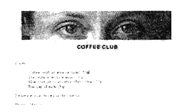
阅读下列短文,从每题所给的A、B、C、D四个选项中,选出最佳选项,并在答题卡上将该项涂黑。
Honesty may well be the policy, but it often deserts us when no one is watching, psychologists report today. Experiments with an honesty box to collect payments for hot drinks show that people are better at paying up when under the gaze of a pair of eyes. The surprise was that the eyes were not real, but photographed.Researchers at Newcastle University set up the experiment in secret. They attached a poster to a cupboard of mugs above an honesty box alongside a kettle, with tea, coffee and milk. Over 10 weeks, they alternated (轮流替换) each week between images of eyes and pictures of flowers.
Dr. Bateson, a behavioral biologist and leader of the study, said that even though the eyes were not real they still seemed to make people behave more honestly. The effect may result from behavioral characteristics that developed as early humans formed social groups that increased their chances of survival. Individuals had to co-operate for the good of the group, rather than act selfishly.
“If nobody is watching us it is in our interests to behave selfishly. But when we think we’re being watched we should behave better, so people see us as co-operative and behave the same way towards us,” Dr. Bateson said.
“We thought we’d get a slight effect with eyes, by it was quite striking how much difference they made. Even at a subconscious level, it seems people respond to eyes, and that might be because eyes send a strong biological signal we have evolved(进化) to respond to.”
The finding, which researchers believe sheds light on our evolutionary past, could be turned to practical use. The psychologists say images of eyes could increase ticket sales on public transport and improve monitor systems to prevent antisocial behavior.
小题1:This passage is mainly about ____________.A.the policy of honestyB.an honesty box to collect moneyC.evolution on honestyD.an experiment on honesty小题2:The reason for doing the experiment secretly is that the researchers __________.A.wanted to get a comparatively more exact resultB.had known they wanted to do something illegallyC.meant to get the co-operation of their colleaguesD.intended to sell the hot drinks at a higher price小题3:People behave honestly under watchful gaze of eyes because ____________.A.they want to leave a good impressionB.they fear to be laughed at by others C.they’ve got the nature through evolutionD.they take the photo for a real pair of eyes小题4:The underlined phrase “sheds light on” in the last paragraph means _________.A.causes somebody to become cheerfulB.makes something easier to understandC.comes upon something by accidentD.brings something into the broad daylight小题5:Images of a pair of eyes can be applied to all except ________.A.ticket sales on public transportB.cold drink sales in public places C.places with “No spitting!” signsD.electrical appliances(电器) used at home 题型:未知 难度:其他题型
答案
小题1:
小题2:
小题3:
小题4:
小题5:
解析
略考点
据考高分专家说,试题“答对三题以上(含三题)才给予加分;请在完.....”主要考查你对 [科教类阅读 ]考点的理解。科教类阅读
科教类阅读的概念:
科教类阅读主要考查考生对书面语篇的整体领悟能力和接受及处理具体信息的能力。试题的取材,密切联系当前我国和世界经济、科技等方面的变化,有关数据的来源真实可信。
科教类文章阅读技巧:
一、材料特点:
这类文章的总体特点是:科技词汇多,句子结构复杂,理论性强,逻辑严谨。具体说来它有以下几个特点:
1、文章中词汇的意义比较单一、稳定、简明,不带感情色彩,具有单一性和准确性的特点。这类文章通常不会出现文学英语中采用的排比、比喻、夸张等修辞手法,一词多义的现象也不多见。
2、句子结构较复杂,语法分析较困难。为了描述一个客观事物,严密地表达自己的思想,作者经常会使用集多种语法现象于一体的长句。
3、常使用被动语态,尤其是一些惯用被动句式。
二、命题特点:
科普类阅读的主要命题形式有事实细节题、词义猜测题、推理判断题以及主旨概括题等,其中推理判断题居多。
三、应对策略:
1、要想做好科普英语阅读理解题,同学们就要注意平时多读科普知识类文章,学习科普知识,积累常见的科普词汇,从根本上提高科普英语的阅读能力。
2、要熟悉科普类文章的结构特点。科普类文章一般由标题(Head line),导语(Introduction),背景(Back ground),主体(Main body)和结尾(End)五部分构成。标题是文章中心思想高度而又精辟的概括,但根据历年的高考情况来看,这类阅读理解材料一般不给标题,而要同学们选择标题。导语一般位于整篇文章的首段。背景交待一个事实的起因。主体则对导语概括的事实进行详细叙述,这一部分命题往往最多,因此,阅读时,同学们要把这部分作为重点。结尾往往也是中心思想的概括,并与导语相呼应,命题者常在此要设计一道推理判断题。
3、在进行推理判断时,同学们一定要以阅读材料所提供的科学事实为依据,同时所得出的结论还应符合基本的科普常识。
科普类阅读应试策略:
【命题趋势】
阅读理解题主要考查考生对书面语篇的整体领悟能力和接受及处理具体信息的能力。试题的取材,密切联系当前我国和世界经济、科技等方面的变化,有关数据的来源真实可信。因此科普知识类文章是每年的必考题。分析历年的科普类文章我们不难发现以下特点:
1、文章逻辑性强,条理清楚,语法结构简单,用语通俗。
2、文章内容注重科技领域的新发现。内容新颖,从而使文章显得陌生,内容抽象复杂。
3、命题方面注意对具体细节的准确理解和以之为依据的推理判断。
4、以人们的日常行为或饮食健康入手,探讨利弊,诠释过程,阐述概念。
【应试对策】
许多考生在考试时感到困惑的是:为什么一些没有超越中学语法和词汇范围的篇章,读起来却不能正确理解,或者要花费很多时间才能读懂呢?这种现象的产生与阅读方法有很大的关系。例如,有的考生在考试时一见到文章就立刻开始读,结果读了半天,还不知道短文讲的是什么,试题要求了些什么,结果浪费了大量的时间,而阅读效果并不好。那么,怎样读效果才好呢?任何一种阅读方法或技巧的使用,都是由篇章特点和试题本身的要求决定的,应根据不同的体裁和试题要求采取不同的策略。
1、浏览。浏览的主要目的就是确定文章的体裁。如果文章属于人物传记、记叙文、故事、科普小品和有关社会文化、文史知识的文章,一般来说,应该先看看文章的试题考查内容,对题目类型做到心中有数,针对不同问题,在通读时有粗有细地去阅读,这样不仅能把握篇章的基本结构和逻辑线索,也能做好有关具体事实信息考查的试题。
2、挖掘寓意,掌握中心思想,推出结论。任何文章,作者在行文时都有一定的写作目的和主要话题。在通读篇章时应该吃透作者的写作意图,抓住文章的主题句,充分发挥自己的想象力和概括力,作出对中心思想的归纳和结论的推断。
3、把握篇章结构,利用上下文进行推测。高考中的阅读理解篇章往往是一个较完整的短文,其结构、思想,前后上下连贯统一。考试时应充分利用这一特点推测一些生词、短语在句中的含义,切莫盲目孤立猜测。
4、综观全篇,前后呼应。这是阅读理解的最后一步,在做完阅读理解题后,要立足于文章整体,再迅速读一遍短文,短文中的问题和答案的设置前后都是相关联的,有着一定的连续性,体现着文章的基本脉络。



