


题文
Many of us invest valuable time,energy and money planning our vacations. We do this because we know for sure that going on vacations must be good for us. Research proves this feeling without a doubt. Vacations help us perform better at work, improve our sleep quality and cushion us against depression.Yet, despite these benefits, many of us return home with a feeling that our last vacation was OK - but not great. In order to change this, some mistakes should be avoided. A classic one for vacation planners is attempting to maximize value for money by planning trips that have too many components (组成部分)• Perhaps you’re planning a trip to Europe, seven cities in 10 days,and you realize it will cost only a little more to add two more destinations to the list Sounds fine in theory, but hopping from one place to the next hardly gives an opportunity to experience what psychologists call mindfulness - time to take in our new surroundings, time to be present and absorb our travel experiences. Another mistake is that we worry too much about strategic issues such as how to find a good flight deal,how to get from A to B,or which destinations to add or subtract from our journey. These issues may seem important, but our psychological state of mind is far more important.
Actually, vacation happiness is based on the following top rules. First, choose your travel companions wisely, because nothing contributes more significantly to a trip than the right companions. Second,don’t spend your vacation time in a place where everything is too expensive so as to maintain a positive mood. Third, shop wisely, for meaningful experiences provide more long-term happiness than physical possessions.
解析
文章大意:文章说明了度假虽然对我们有很多的好处,不过与此同时,我们在度假方面也有许许多多的误区。因此,文章作者对我们如何度过快乐的假期给予我们几条实用的建议。
小题1:Vacations。原词再现。文章多次出现vacation及vacations,填写的时候注意首字母大写以及复数形式。
小题2:performance。词性转换。根据第一段中的最后一句Vacations help us perform better at work, improve our sleep quality and cushion us against depression.可以归纳出答案,注意动词perform变为名词。
小题3:quality of sleep。词义归纳。根据第一段中的最后一句Vacations help us perform better at work, improve our sleep quality and cushion us against depression.可以归纳出答案。
小题4:attempt。词性转换。根据第二段中的A classic one for vacation planners is attempting to maximize value for money by planning trips that have too many components (组成部分).可以归纳出答案,原句的动词转换为名词。
小题5:worry。原词再现。根据文中第二段中Another mistake is that we worry too much about strategic issues可以归纳出答案。
小题6:good flight deal。原词再现。根据第二段的最后such as how to find a good flight deal,how to get from A to B,or which destinations to add or subtract from our journey.可以得出答案。
小题7:adding。词性转换。根据第二段的最后such as how to find a good flight deal,how to get from A to B,or which destinations to add or subtract from our journey.由add转换为adding。
小题8:rules。原词再现。根据第三段第一句Actually, vacation happiness is based on the following top rules.可以归纳出答案。
小题9:choice。词性转换。根据第三段中的First, choose your travel companions wisely, because nothing contributes more significantly to a trip than the right companions.中有动词choose转换为词组make a choice。
小题10:shopping wisely。词性转换。根据最后三段中Third, shop wisely, for meaningful experiences provide more long-term happiness than physical possessions.由shop wisely转换为shopping wisely。
考点
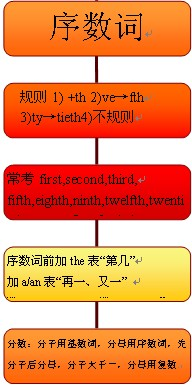
据考高分专家说,试题“Many of us invest va.....”主要考查你对 [序数词 ]考点的理解。序数词
序数词的概念:
表示顺序的数称为序数词。如:first, second, third, fourth。
序数词的构成与用法:
1、序数词的构成:
①一般来说,是由相应的基数词加词尾th构成。
例:four+th→fourth
six+th→sixth
seven+th→seventh
ten+th→tenth
②下面这些基数词在变为序数词时,有特殊的变化。
例:one→first
two→second
three→third
five→fifth
eight→eighth
nine→ninth
twelve→twelfth
③十位整数序数词的构成方法是将基数词的词y变成i,然后再加eth。
例:twenty→twentieth
thirty→thirtieth
forty→fortieth
ninety→ninetieth
④两位或两位以上的基数词变成序数词时,仅将个位数变成序数词。
例:twenty-one→twenty-first
thirty-five→thirty-fifth
a hundred and fifty-three→a hundred and fifty-third
2、序数词的用法:
①序数词在使用时,一般加上定冠词。
例:the first book
the second floor
the third day
the fourth week.
②序数词在多数情况下都用作定语,有的也可以作表语、主语和宾语。
例:The may1st is Labour Day. 五月一日是劳动节。
My room is on the second floor. 我的房间在二楼。
The first is larger than the secon.(主语)第一个比第二个大。
Read the book from the first.(宾语)从开头读这本书。
You'll be the sixth to write.(表语)你将是第六个写的。
③序数词的前面可以加上不定冠词,用来表示“再一”,“又一”的意思。
例:You may have a third try. 你可以第三次尝试。
序数词知识体系:
约数的表达方法:
用tens/dozens/scores/hundreds/thousands/millions of 表示“几十、几百、上千、成千上万”等。
如:The boy bought dozens of pencils.
Thousands of people died in the earthquake.
注意: (A):dozen, score, hundred, thousand, million等表示确切数量时,不用复数。
如:five dozen (of) eggs 五打鸡蛋
hree hundred people 三百个人
分数词的构成和用法:
1)分数词构成法:
分数词(FractionalNumerals)由基数词和序数词构成,基数词代表分子,序数词代表分母。除了分子为1的情况下,序数词都要用复数形式:
如:1/4:one-fourth
5/9:five-ninths
2/3:two-thirds
17/5:three and two-fifths
7/12:seven-twelfths
379/8:forty-seven and three-eighths
此外还有下面表示法:
如:1/2:a(one) half
1/4:a(one) quarter
3/4:three-quarters
9/4:two and a quarter
3/2:one and half
31/4:seven and three quarters



